


You may also like
-
Flowers in a Greek Vase Poster
Georgius Jacobus Johannes van Os · 1817 · Lush floral still life art print in a classical vase with warm spring tones
Poster from €9 · Framed from €16
Regular price From €6,00Regular price -
Blue & Brown Butterflies Poster
Charles Dessalines D' Orbigny · 1806 · Delicate butterfly print pairing blue wings and earthy browns in a scientific plate
Poster from €9 · Framed from €16
Regular price From €6,00Regular price -
Linum glandulosum Poster
Charles Dessalines D Orbigny · 1847 · Delicate yellow flax botanical print with precise linework on softly aged paper
Poster from €9 · Framed from €16
Regular price From €6,00Regular price -
Monarch Butterfly Poster
Sherman Foote Denton · 1900 · Detailed monarch butterfly print with bold orange wings and crisp black veining
Poster from €9 · Framed from €16
Regular price From €6,00Regular price


-

"Very nice Posters. The quality is amazing and we received it very quickly !"
-

"A shop to visit absolutely. Huge selection of posters. We spent more than an hour there !"
-

"Perfect to find gift. Price are very good. An they can frame and pack it on site"


About the Artist
Georgius Jacobus Johannes van Os was a Dutch painter active in the early nineteenth century, renowned for his refined still lifes and natural history studies. He belonged to a lineage of artists who elevated the depiction of flowers, fruit, and small creatures, bridging the traditions of Dutch Golden Age painting with the scientific curiosity of his own era. His work reflects a fascination with the intricate details of the natural world, aligning with the period’s growing interest in cataloguing and understanding nature’s diversity. Van Os’s careful studies, such as this butterfly subject, reveal his commitment to both beauty and observation, making his art resonate with lovers of classic art prints.
Today, his legacy endures in collections that value the intersection of art and natural science, offering viewers a glimpse into the aesthetics and intellectual pursuits of nineteenth-century Europe.
The Artwork
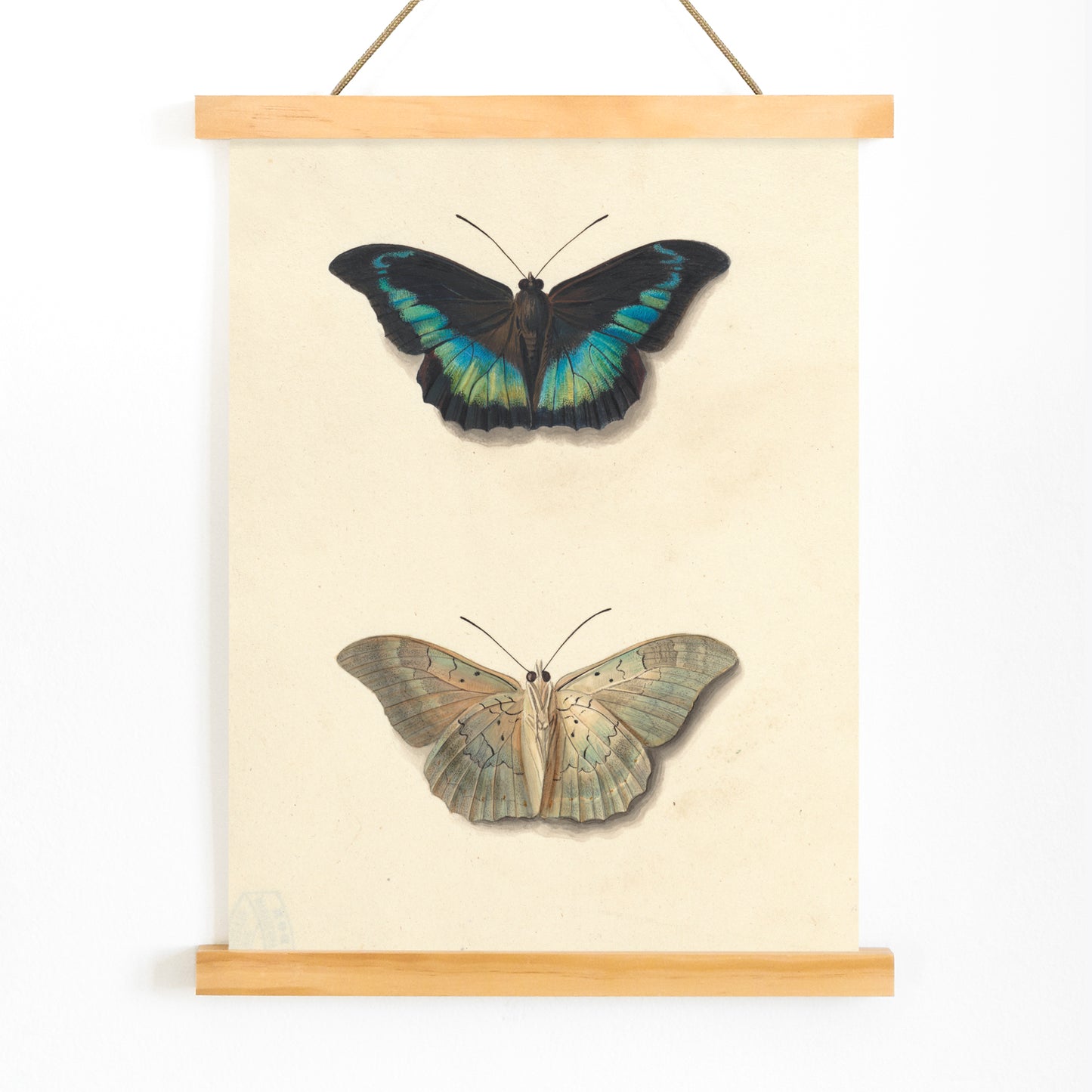
Created in 1826, this illustration of two butterflies emerged during a time when entomology was gaining popularity among collectors and scholars. Such works were often used as educational tools, allowing people to study species’ unique markings and forms without needing access to physical specimens. Beyond its scientific function, the image also evokes themes of transformation and the fleeting nature of beauty, reflecting the era’s fascination with metamorphosis and the cycles of life.
As a vintage print, it connects contemporary interiors with the nineteenth-century tradition of bringing natural wonders indoors, complementing other animal themed wall art that celebrates quiet observation and appreciation of nature.
Style & Characteristics
The artwork features two butterflies delicately rendered against a spacious, light beige background. Van Os employs precise outlines and subtle washes, emphasizing the fine structure of the wings and the gentle contrast of their markings. The composition is airy and uncluttered, inviting viewers to focus on the intricate patterns and harmonious forms. The restrained palette, with cool and neutral tones, enhances the sense of calm and clarity, making this vintage print a refined addition to any collection.
This naturalist approach aligns well with blue toned prints and understated decor, offering an elegant, timeless accent for a gallery wall.
In Interior Design
This vintage butterfly print is ideal for spaces that benefit from a sense of serenity and focus, such as bedrooms, reading nooks, or home offices. Its generous negative space and delicate detail suit Scandinavian, minimalist, and modern classic interiors, pairing beautifully with light woods, linen, and stone textures.
For a cohesive look, display it alongside other natural history pieces from the botanical wall art collection, or let it stand alone in a simple frame for a subtle, museum-inspired accent.