


You may also like
-
Costüm-Verleih Germania Poster
Julius Klinger · 1909 · Costume rental poster with bold abstract circles and Berlin lettering
Poster from €9 · Framed from €16
Regular price From €6,00Regular price -
Barbette Poster
Charles Gesmar · 1926 · Glamorous cabaret poster of Barbette framed by swirling pink feathers and spotlight yellow
Poster from €9 · Framed from €16
Regular price From €6,00Regular price -
Le Gaulois artistique Poster
Unknown artist · 1929 · Striking vintage poster with a flame-haired figure and bold black typography on yellow
Poster from €9 · Framed from €16
Regular price From €6,00Regular price -
Hollerbaum und Schmidt Poster
Julius Klinger · 1910 · Spiraling advertising poster with a small suited figure and bold red-blue bands
Poster from €9 · Framed from €16
Regular price From €6,00Regular price


-

"Very nice Posters. The quality is amazing and we received it very quickly !"
-

"A shop to visit absolutely. Huge selection of posters. We spent more than an hour there !"
-

"Perfect to find gift. Price are very good. An they can frame and pack it on site"


About the Artist
Marie Josephine Carr was part of the vibrant poster movement that flourished in the late 1920s, a period when Art Deco aesthetics and the excitement of modern entertainment intersected. Her posters reflect the optimism and dynamism of the era, using bold forms and color to capture the spirit of contemporary life.
During 1928, dance was more than a pastime—it became a symbol of social liberation and the fast-paced urban lifestyle. Carr’s work emerged at a time when nightlife and theatrical revues were at their peak, and posters like this one were essential in promoting the energy and allure of these new cultural spaces.
The Artwork
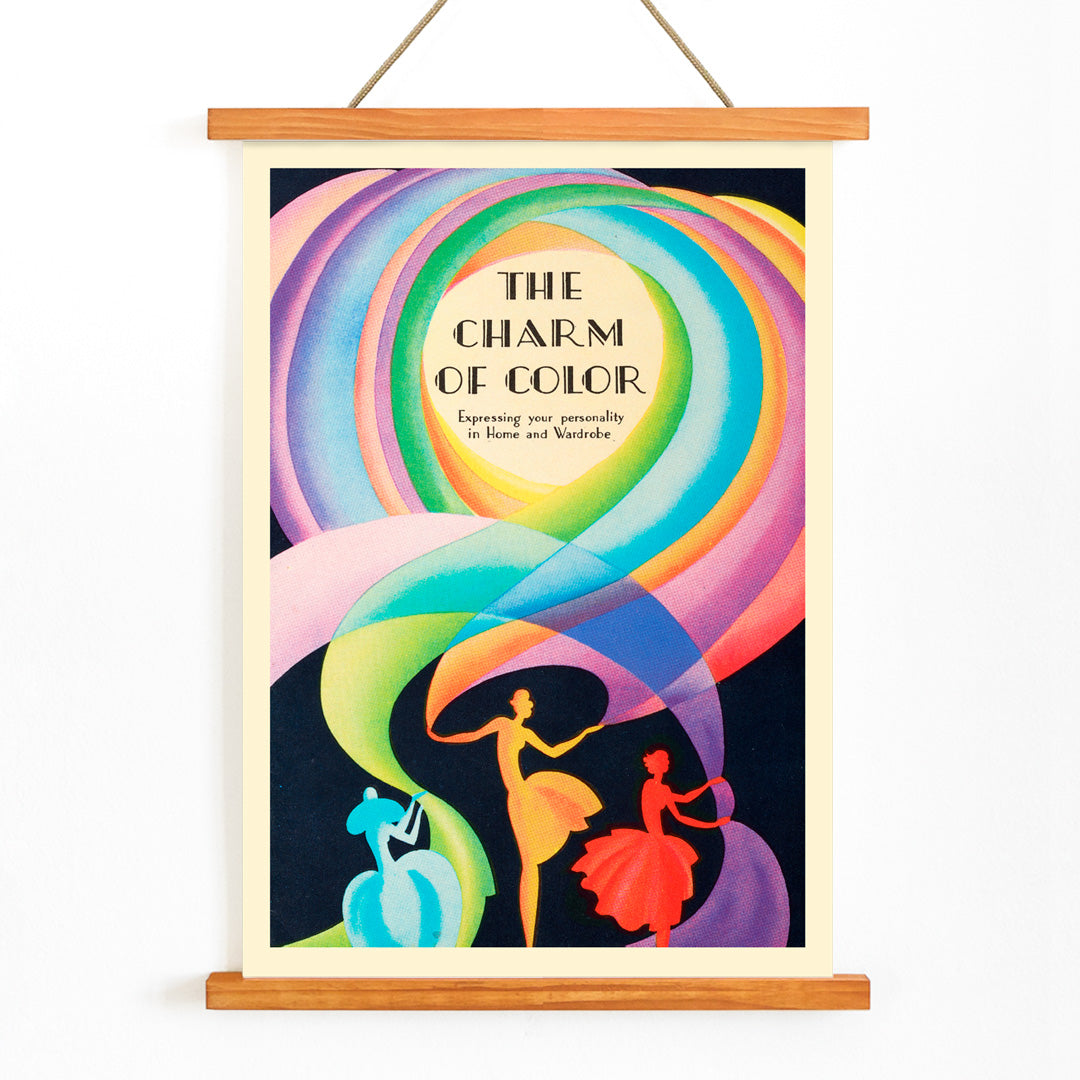
The Charm of Color was created as a celebration of dance as a social phenomenon and a marker of modernity. Rather than depicting a specific event, the poster invites viewers into the lively world of late 1920s dance halls and cabarets, where music and movement defined the zeitgeist. It stands as a visual testament to the era’s fascination with rhythm, fashion, and communal joy, making it a notable example among music themed wall art and vintage advertising posters.
Style & Characteristics
This poster features stylized dancers arranged in a dynamic, circular composition that conveys motion and festivity. The figures are rendered with simplified, elegant lines, emphasizing posture and gesture over detail. The color palette is vibrant, with bold pinks, blues, greens, oranges, and purples, all anchored by deep black accents that heighten the Art Deco aesthetic. The overall effect is lively and theatrical, evoking the celebratory atmosphere of the Jazz Age.
In Interior Design
This vintage print brings energy and sophistication to a variety of spaces, from living rooms and studios to home bars and hallways. Its rhythmic composition and vivid colors make it a striking focal point, especially when paired with abstract art prints or other bold graphic works. For a cohesive look, consider echoing one of the poster’s accent colors in your decor, such as textiles or ceramics, to create harmony without direct matching. The artwork’s spirited mood also makes it ideal for creative workspaces, infusing the environment with a sense of optimism and movement.