


You may also like
-
Low Tide Poster
August Allebé · 1870 · Quiet sailboat art print drawn in soft graphite tones with open coastal air
Poster from €9 · Framed from €16
Regular price From €6,00Regular price -
Pink Flamingo Poster
John James Audubon · 1827 · Elegant flamingo print with curved neck and luminous pink plumage on white
Poster from €9 · Framed from €16
Regular price From €6,00Regular price -
Le Flammant Poster
Edouard Travies · 1853 · Elegant flamingo vintage print with soft grey water and coral accents
Poster from €9 · Framed from €16
Regular price From €6,00Regular price -
Zoologischer Garten München 2 Poster
Ludwig Hohlwein · 1930 · Graphic flamingo poster with bold black ground and vivid pink silhouette
Poster from €9 · Framed from €16
Regular price From €6,00Regular price


-

"Very nice Posters. The quality is amazing and we received it very quickly !"
-

"A shop to visit absolutely. Huge selection of posters. We spent more than an hour there !"
-

"Perfect to find gift. Price are very good. An they can frame and pack it on site"


About the Artist
August Allebé was a Dutch painter and influential teacher who played a significant role in shaping Dutch art during the late 19th century. Based in Amsterdam, he was known for his realist approach and dedication to careful observation, which bridged traditional academic methods with the depiction of modern life. His long tenure at the Rijksakademie connected him to a new generation of artists interested in both contemporary subjects and the natural world.
Allebé’s legacy endures through his refined, thoughtful works that reflect a quiet intelligence and a deep appreciation for the beauty of everyday scenes.
The Artwork
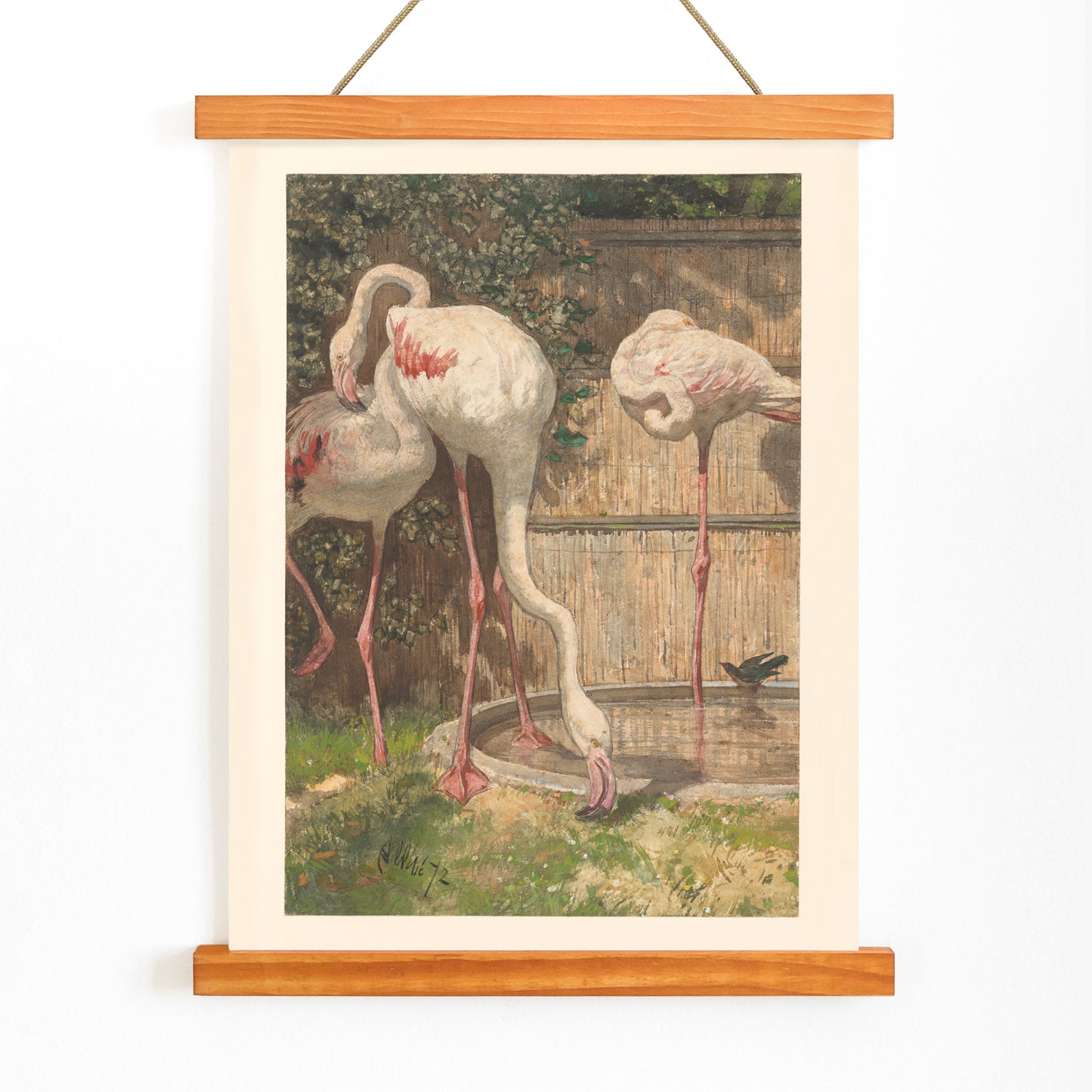
Created in 1878, Three Flamingos reflects a period when European fascination with exotic animals was growing, fueled by public gardens, menageries, and illustrated natural history publications. The flamingo, with its graceful form and unusual coloring, became a symbol of elegance and cultivated taste. Allebé’s depiction aligns with the era’s interest in observing and recording the natural world, offering viewers a sense of calm and sophistication rather than spectacle.
This artwork originally served as both a fine art piece and a record of natural observation, appealing to collectors interested in animal wall art and the refined sensibilities of classic European imagery.
Style & Characteristics
The composition features three flamingos standing near a shallow basin, their long legs and curved necks forming a gentle, harmonious rhythm. The color palette is dominated by soft pinks, muted greens, and warm beige, creating an airy, sunlit atmosphere. The artist’s use of delicate drawing and light washes lends the scene a refined, tranquil quality, balancing detailed observation with a sense of openness.
This fine art print exudes serenity and understated movement, making it especially compatible with pink toned decor and interiors that favor natural, botanical accents.
In Interior Design
This art print brings a sense of calm elegance to living rooms, bedrooms, or reading nooks, especially when paired with natural textures like linen, cane, or pale woods. Its vertical composition adds height and grace without overwhelming a space.
For a harmonious look, combine it with sage or olive textiles, creamy walls, and brass or oak details to echo the artwork’s palette. A simple mat and frames choice will keep the presentation clean and classic, appealing to admirers of classic art prints and subtle statement pieces.