


You may also like
-
Plantes Potageres Poster
Claude Augé · 1908 · Educational vegetable print with labeled garden plants in crisp botanical detail
Poster from €9 · Framed from €16
Regular price From €6,00Regular price -
Flower Market - Berlin Poster
MORYARTY · 2019 · Colorful flower bouquet poster with bold Berlin lettering and lively market energy
Poster from €9 · Framed from €16
Regular price From €6,00Regular price -
Flowers, Fruit and Birds Poster
Jan van Os · 1777 · Opulent still life art print pairing garden blooms, ripe fruit, and small birds
Poster from €9 · Framed from €16
Regular price From €6,00Regular price -
Flower Market - Chelsea Poster
MORYARTY · 2023 · Lively floral market poster with bold lettering and fresh botanical silhouettes
Poster from €9 · Framed from €16
Regular price From €6,00Regular price


-

"Very nice Posters. The quality is amazing and we received it very quickly !"
-

"A shop to visit absolutely. Huge selection of posters. We spent more than an hour there !"
-

"Perfect to find gift. Price are very good. An they can frame and pack it on site"


About the Artist
Anton Carl Rahn was active during a period when European artists celebrated the beauty of everyday life through still life painting and printmaking. Around 1800, such works were prized for their ability to bring the richness of the natural world into domestic interiors, reflecting both artistic skill and a growing interest in natural history. Rahn’s work is part of this tradition, offering viewers a glimpse into the cultivated tastes and interests of his era.
His still lifes were appreciated by collectors who sought to showcase both the abundance of the garden and the artistry of careful observation. This piece fits seamlessly with other classic art and reflects the refined sensibilities of early nineteenth-century Europe.
The Artwork
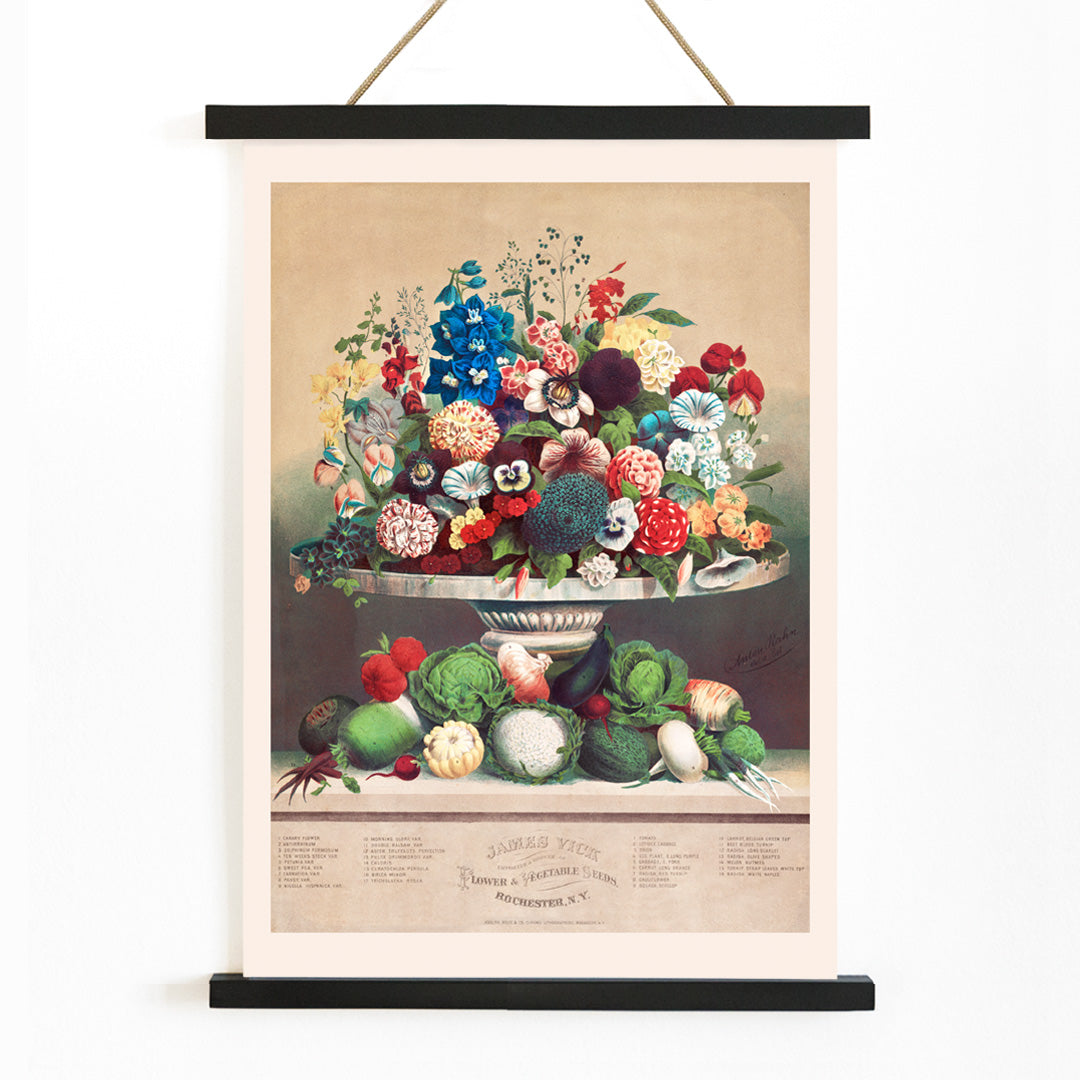
This still life, featuring an array of flowers and vegetables, illustrates the era’s fascination with the cycles of nature and the pleasures of seasonal abundance. Created at a time when botany and horticulture were gaining popularity, the artwork also speaks to the Enlightenment spirit of cataloguing and understanding the natural world. Such prints served both as decorative pieces and as quiet celebrations of the everyday bounty found in gardens and kitchens.
By bringing together blossoms and produce, the composition highlights the interconnectedness of beauty and sustenance, echoing the values of both rural and urban households of the period.
Style & Characteristics
The image presents a carefully arranged selection of garden flowers and vegetables, rendered with naturalistic detail. Soft petals contrast with the firmer shapes of root vegetables and leafy greens, while subtle shading and controlled highlights lend depth and realism. The palette is dominated by gentle greens and reds, complemented by touches of blue and set against a warm beige background.
The overall effect is calm and inviting, with a sense of intimacy that draws the viewer into the quiet world of the table. The print’s harmonious composition and delicate color balance make it a classic example of early nineteenth-century botanical art.
In Interior Design
This vintage art print is especially suited for kitchens, dining areas, or breakfast nooks, where its subject matter resonates with daily rituals and the enjoyment of food. It can also add a gentle, natural touch to hallways or home offices, offering a sense of warmth and tranquility.
For a cohesive look, pair it with natural wood, cream ceramics, or linen textiles to echo the artwork’s tones. It also combines beautifully with other botanical prints or as part of a curated kitchen gallery wall.