


You may also like
-
Perruche Poster
Charles Dessalines d Orbigny · 1806 · Lively parakeet print with perched birds and crisp natural history detail
Poster from €9 · Framed from €16
Regular price From €6,00Regular price -
Pavo Cristatus Poster
Charles Dessalines D Orbigny · 1849 · Elegant Indian peafowl print with jewel toned plumage and refined natural history detail
Poster from €9 · Framed from €16
Regular price From €6,00Regular price -
Blue & Brown Butterflies Poster
Charles Dessalines D' Orbigny · 1806 · Delicate butterfly print pairing blue wings and earthy browns in a scientific plate
Poster from €9 · Framed from €16
Regular price From €6,00Regular price -
Rock Fiches Poster
Charles Dessalines D Orbigny · 1806 · Scientific print of rock fishes arranged as labeled studies in warm orange and grey
Poster from €9 · Framed from €16
Regular price From €6,00Regular price


-

"Very nice Posters. The quality is amazing and we received it very quickly !"
-

"A shop to visit absolutely. Huge selection of posters. We spent more than an hour there !"
-

"Perfect to find gift. Price are very good. An they can frame and pack it on site"


About the Artist
Charles Dessalines D Orbigny was a 19th-century French illustrator renowned for his contributions to natural history art. Working during a time when scientific exploration and museum collections were rapidly expanding, D Orbigny played a key role in making zoological discoveries accessible to a wider public through detailed and elegant illustrations.
His work bridges the worlds of science and art, offering both educational value and visual appeal. For those interested in the intersection of nature and design, his prints remain enduring examples of vintage artistry. Discover more in our famous artists and animal art prints collections.
The Artwork
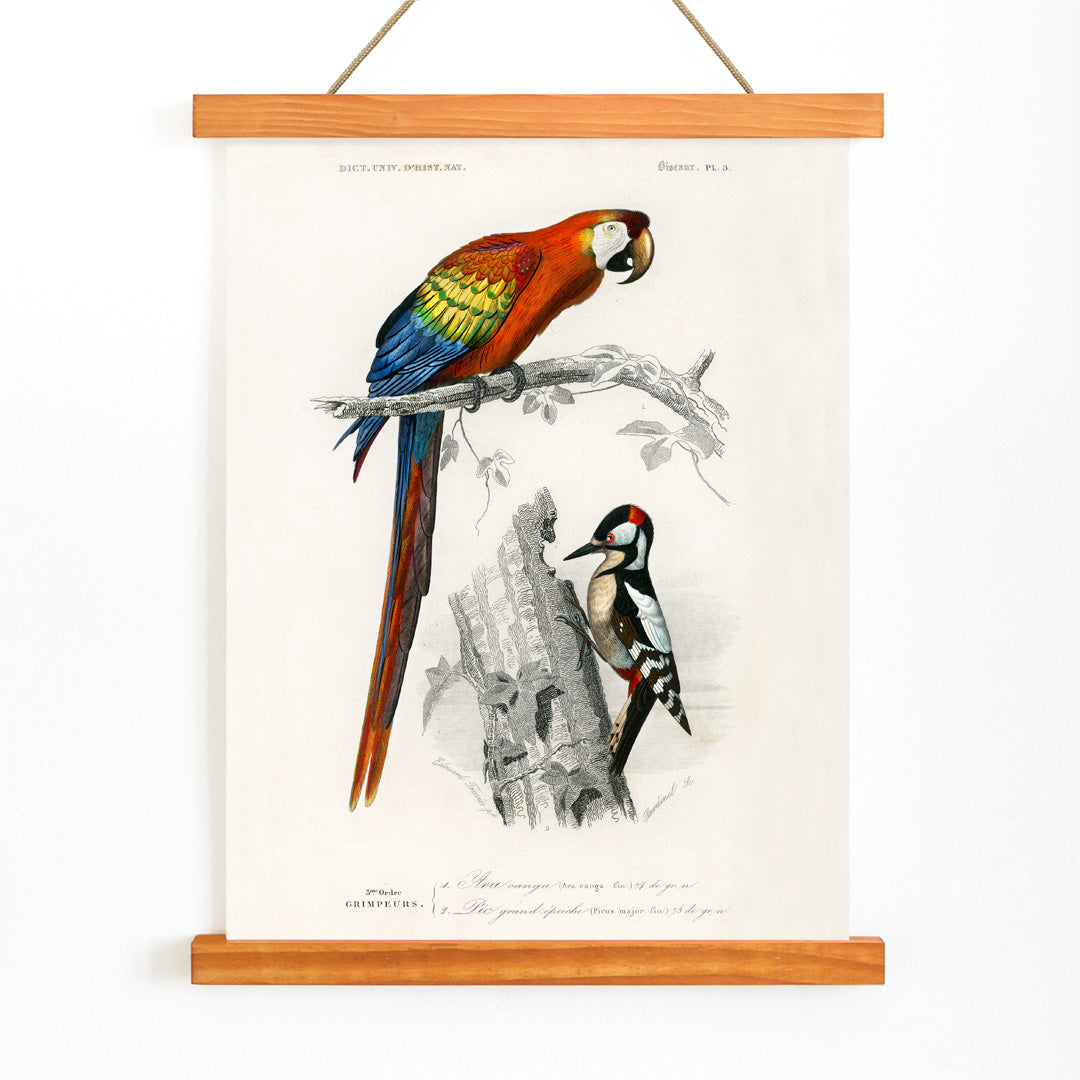
This parrot illustration was created during a period when European fascination with exotic species was at its height, fueled by global trade and exploration. Such works were commissioned to document and classify new animals, supporting the scientific drive to organize the natural world. At the same time, these images brought the vibrancy and allure of distant lands into European homes and institutions, shaping perceptions of the natural world.
The plate served both as a scientific reference and as a decorative object, reflecting the era's blend of curiosity, scholarship, and aesthetic appreciation for the unfamiliar.
Style & Characteristics
The composition features several parrots perched on a slender branch, rendered with precise linework and delicate shading. The birds display striking plumage in vivid reds, blues, and yellows, with subtle green and brown accents. The clean, pale background ensures the focus remains on the birds' forms and colors, while the transparent watercolor technique adds depth and luminosity.
The overall effect is lively yet refined, balancing scientific accuracy with decorative charm. This style is characteristic of 19th-century natural history illustration and pairs beautifully with other scientific prints for a cohesive display.
In Interior Design
This vintage parrot print introduces a burst of color and a sense of exploration to any space, whether displayed in a living room, study, or hallway. Its crisp lines and vibrant palette make it a versatile accent for both classic and contemporary interiors.
Consider framing it in natural wood or black for a gallery feel, or pairing it with neutral tones and botanical elements to highlight its naturalist roots. The artwork's timeless appeal makes it suitable for a variety of design styles, from eclectic to minimalist.