


You may also like
-
Hydrangea and Swallow Poster
Katsushika Hokusai · 1833 · Airy swallow and hydrangea print balancing crisp linework with calm summer light
Poster from €9 · Framed from €16
Regular price From €6,00Regular price -
Birds and sunset Poster
Katsushika Hokusai · 1814 · Serene poster of cranes flying toward a red sun over a warm beige sky
Poster from €9 · Framed from €16
Regular price From €6,00Regular price -
Three Birds Perched on Branches Poster
Katsushika Hokusai · 1830 · Delicate bird vintage print with airy branches and a crisp red seal
Poster from €9 · Framed from €16
Regular price From €6,00Regular price -
Small Red Blossoms on a Vine Poster
Katsushika Hokusai · 1830 · Delicate floral art print of red blossoms climbing a vine on calm paper
Poster from €9 · Framed from €16
Regular price From €6,00Regular price


-

"Very nice Posters. The quality is amazing and we received it very quickly !"
-

"A shop to visit absolutely. Huge selection of posters. We spent more than an hour there !"
-

"Perfect to find gift. Price are very good. An they can frame and pack it on site"


About the Artist
Katsushika Hokusai was a renowned ukiyo-e master of Edo period Japan, whose innovative approach brought new life to both landscapes and everyday subjects. Beyond his iconic wave and mountain scenes, Hokusai explored the beauty of nature through detailed studies of birds and flowers, reflecting his fascination with the changing seasons and the poetry of daily life.
In his later years, Hokusai’s work displayed a confident simplicity and a deep appreciation for the fleeting moments found in nature. His kacho-ga, or bird-and-flower prints, were especially valued for their ability to evoke tranquility and contemplation, making them cherished additions to Japanese homes and shops during the 19th century.
The Artwork
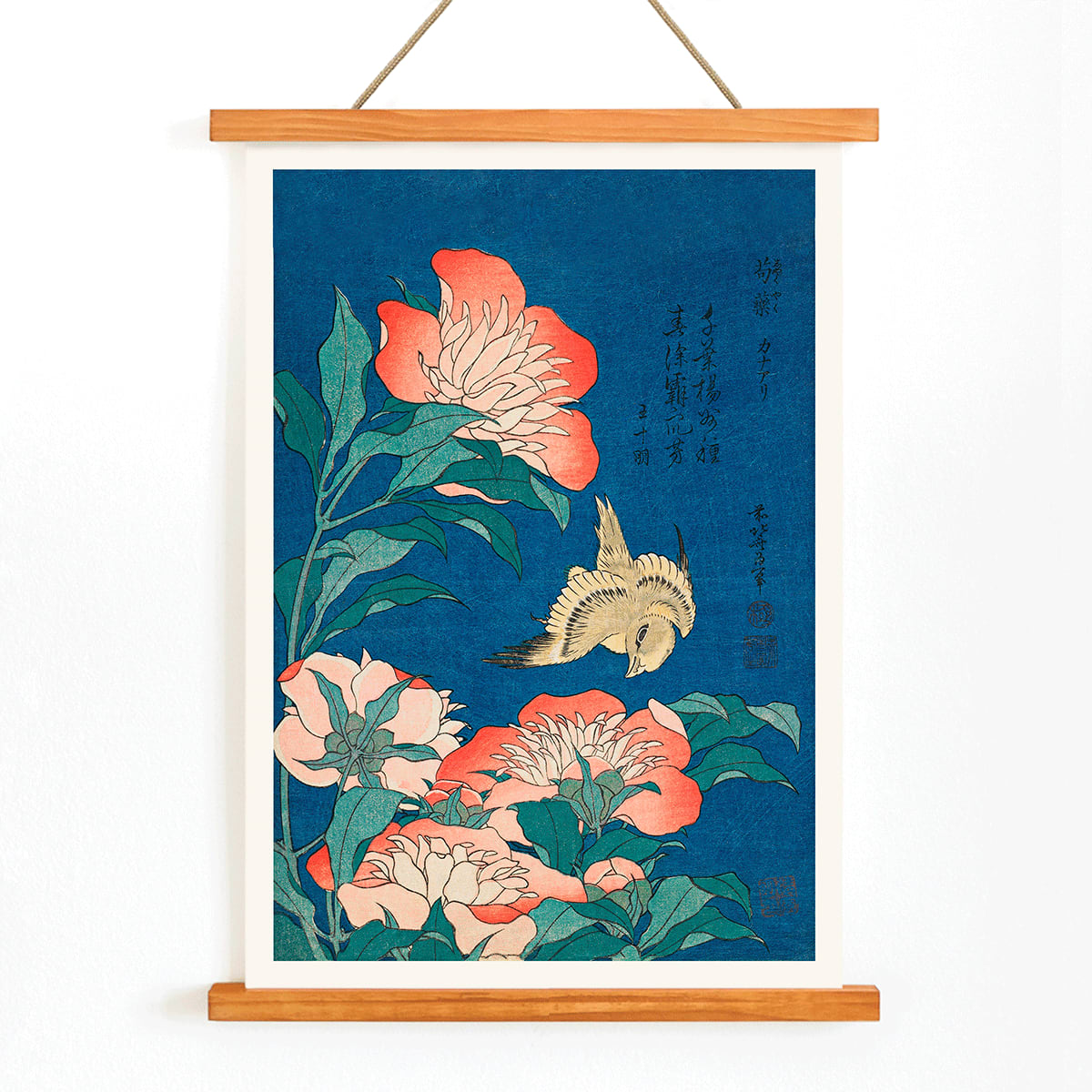
Peonies and Canary exemplifies the kacho-ga genre, focusing on the quiet harmony between a small bird and lush peony blossoms. Created during a period when such prints were widely accessible, this artwork offered viewers a peaceful respite from urban life, encouraging mindfulness and appreciation of seasonal beauty.
The pairing of the canary and peonies also carries symbolic meaning in East Asian art, with peonies representing prosperity and elegance. This print would have been enjoyed as both a decorative object and a subtle nod to cultural values surrounding nature and abundance.
Style & Characteristics
The composition features a delicate canary perched among vibrant peony blooms, all set against a spacious, warm-toned background. Hokusai’s use of fine black contour lines and softly blended colors is characteristic of Japanese woodblock printing, lending the image a sense of clarity and grace.
Pinks and reds dominate the blossoms, complemented by fresh green leaves and the gentle beige of the paper. The overall mood is serene and lyrical, making this piece a refined choice for Japanese-inspired wall art and collectors of classic art prints.
In Interior Design
This Hokusai art print brings a sense of calm and elegance to living rooms, bedrooms, or reading nooks. Its gentle palette and balanced composition suit Japandi, minimalist, or Scandinavian interiors, while also softening more traditional spaces with a botanical accent.
Pair it with muted blush textiles, natural woods, and leafy greens, or incorporate it into a gallery wall alongside other botanical prints. A simple light-wood or black frame from the frames collection enhances the artwork’s tranquil presence.