


You may also like
-
Woman After a Bath Poster
Goyō Hashiguchi · 1920 · Serene bijin art print capturing a private bathing ritual in delicate shin hanga tones
Poster from €9 · Framed from €16
Regular price From €6,00Regular price -
Japanese woman 3 Poster
Utagawa Hiroshige · 1935 · Serene ukiyo-e style poster of a kimonoed woman holding a fan in blue and red
Poster from €9 · Framed from €16
Regular price From €6,00Regular price -
Woman Applying Powder Poster
Goyō Hashiguchi · 1918 · Elegant bijin-ga art print of a woman powdering her face in quiet morning light
Poster from €9 · Framed from €16
Regular price From €6,00Regular price -
Woman Applying Rouge Poster
Goyō Hashiguchi · 1920 · Intimate bijin ga print of a woman applying rouge in a quiet daily ritual
Poster from €9 · Framed from €16
Regular price From €6,00Regular price


-

"Very nice Posters. The quality is amazing and we received it very quickly !"
-

"A shop to visit absolutely. Huge selection of posters. We spent more than an hour there !"
-

"Perfect to find gift. Price are very good. An they can frame and pack it on site"


About the Artist
George Hendrik Breitner was a prominent figure in Dutch Impressionism, known for his ability to capture the spirit of modern urban life in late nineteenth-century Amsterdam. Working primarily in the 1890s, Breitner often depicted everyday scenes and interiors, infusing them with a sense of immediacy and authenticity. His fascination with contemporary fashion and the influence of Japanese art—part of the broader Japonisme movement—distinguished his work from many of his peers.
Breitner’s approach to painting was innovative for his time, blending a documentary eye with expressive brushwork. Collectors interested in museum-recognized artists often appreciate his unique perspective on both city life and the evolving role of women in art.
The Artwork
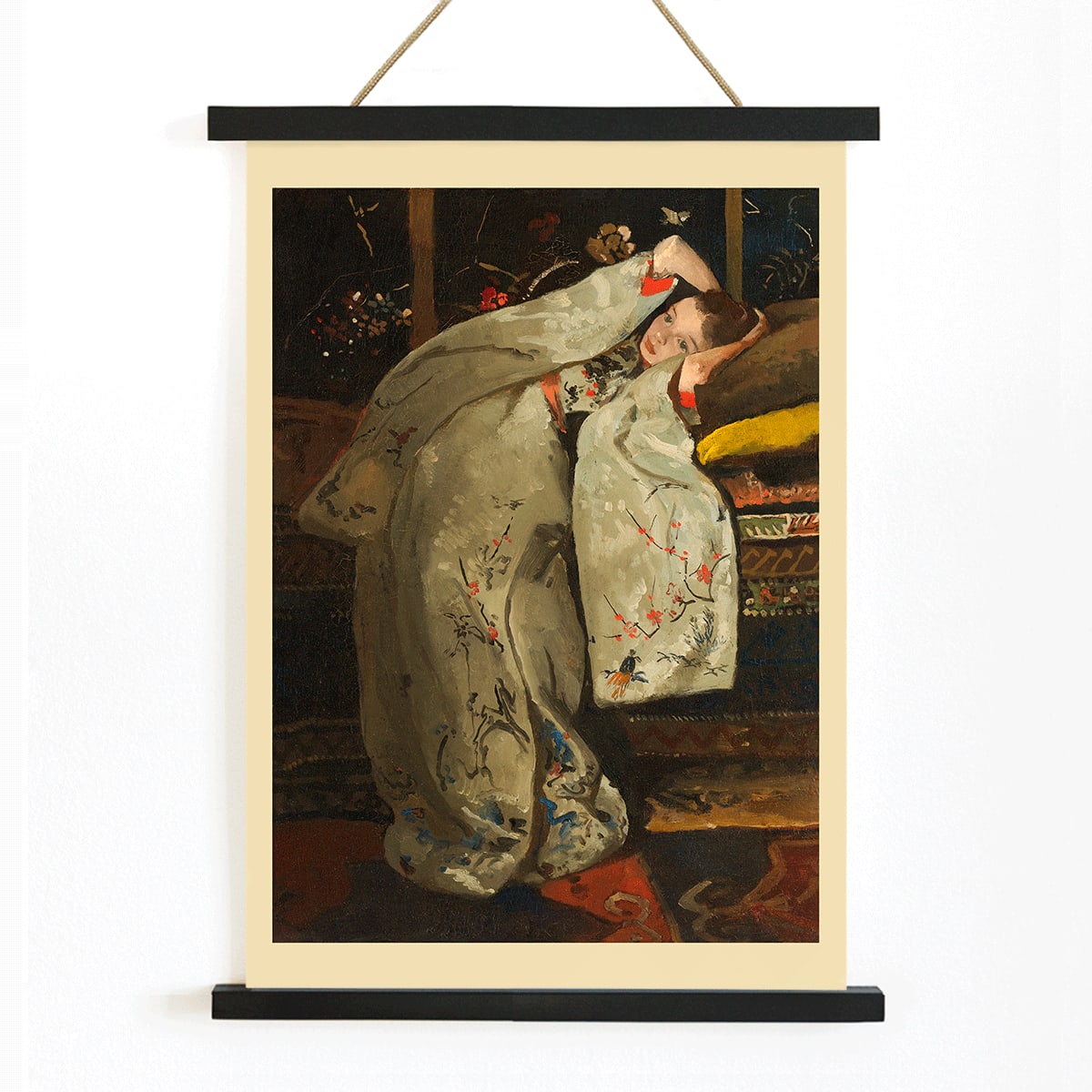
White Kimono was created during a period when European artists were captivated by Japanese aesthetics, and garments like the kimono became symbols of modernity and exoticism in the studio. For Breitner, the kimono was not just a costume but a way to explore new forms of composition and atmosphere. This painting reflects a moment of quiet introspection, as the model’s pose and setting evoke a sense of privacy and contemplation.
The work also speaks to Amsterdam’s openness to global influences at the turn of the century, as artists sought inspiration beyond traditional Western motifs. It stands as a testament to the era’s cultural curiosity and the subtle shifts in artistic representation of women. For those interested in classic art, it offers a glimpse into a transformative moment in European painting.
Style & Characteristics
The composition centers on a woman seated in a pale, flowing kimono, painted with loose, impressionistic brushstrokes. Creamy whites and warm beige hues dominate the scene, while deep browns and soft blacks provide contrast and depth. Delicate red accents appear in the kimono’s pattern, adding a gentle vibrancy to the otherwise subdued palette.
Breitner’s technique emphasizes atmosphere over precise detail, allowing light to soften the figure’s edges and giving the fabric a sense of movement and texture. The overall mood is serene and refined, making this art print a harmonious addition to interiors featuring white posters or beige wall art.
In Interior Design
This fine art print is well-suited for tranquil spaces such as bedrooms, reading nooks, or living rooms where soft light and neutral tones are valued. Its understated elegance complements Japandi, minimalist, or modern classic interiors, blending seamlessly with natural materials and subtle textures.
Pair it with light wood, linen fabrics, or matte black frames for a cohesive look. For a curated display, combine it with other works from the white or beige collections to create a soothing, gallery-inspired arrangement.